The Architecture of Calm: Dawn at Daitoku-ji
Examining the geometry of cedar, raked gravel, and morning fog in northern Kyoto's walled temple sanctuaries.
1. The Threshold of Morning
At six in the morning, northern Kyoto does not announce itself. The mist slides off the forested flanks of Mount Funaoka, wrapping the low eaves of Murasakino in a pale, damp embrace. Unlike the congested bamboo groves of Arashiyama or the crowded orange torii of Fushimi Inari, the monastic precinct of Daitoku-ji sits in profound reserve.
Here, twenty-two sub-temples hide behind austere earthen walls topped with charcoal roof tiles. Most visitors pass through on swift itineraries, stopping solely at whichever gate happens to be unlocked. Yet to approach this ground with hurry is to misunderstand its fundamental language. Daitoku-ji is not an exhibition; it is an exercise in subtractive sensory contemplation.
2. Geometry and Gravel
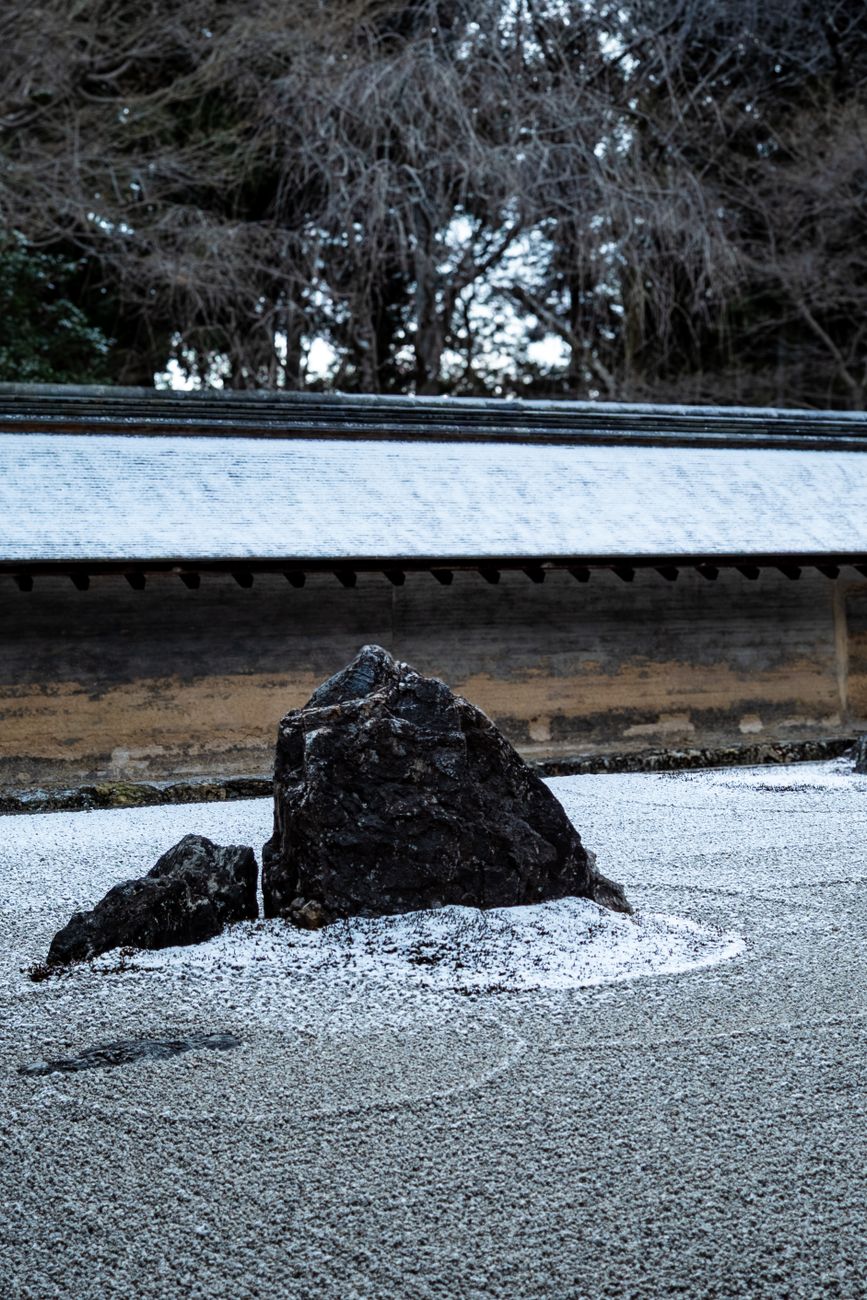
Entering the karesansui dry landscape at Ryogen-in, one is greeted by gravel swept into patterns that emulate oceanic tides and concentric cosmic rings. A wooden veranda, polished to amber silk over five centuries of stockinged feet, offers the only vantage point.
“The Japanese garden does not imitate nature; it isolates the essential rhythm of nature, stripping away noise until the pulse of stone remains.”
The rocks do not stand arbitrarily. Each is tilted with millimetric intention, drawing the observer's eye downward into the raked quartz and outward toward the pine needles hanging across the boundary fence. The space teaches patience: the longer one sits without checking a glowing phone screen, the more the subtle creaks of cedar wood come to life.
3. The Mindful Visitor
Slow travel requires a gentle contract of mutual respect between guest and location. Within living monastic centers, photography is restricted inside tatami rooms to safeguard both delicate 16th-century screen paintings and the privacy of practicing monks.
- Arrive before 8:30 AM when the courtyard paths are swept and quiet.
- Turn mobile devices off rather than on silent mode to eliminate distracting vibrations.
- Spend a minimum of forty minutes in one garden rather than visiting four in haste.
4. Field Notes & Routing
Following a contemplative morning at Daitoku-ji, walk west toward the antique textile shops of Nishijin. A modest soba shop serving hand-cut buckwheat noodles in dashi broth provides nourishing warmth, reinforcing the principle that the most memorable travel memories require neither pomp nor opulent expenditures.
Interested in Tailored Cultural Routes?
Let 111111 curate an independent slow itinerary for your journey through Japan.